
OUR BLOG
A touch of art: The Might and Splendour of the Serbian Middle Ages
The exhibition of the reconstructed garments and insignia of Serbian medieval rulers organised by the Historical Museum of Serbia has brought ancient past to light in all of its authenticity and glory. Crowns and official attire have been crafted based on the portraits of monastery patrons, using materials and techniques from the time of their creation.
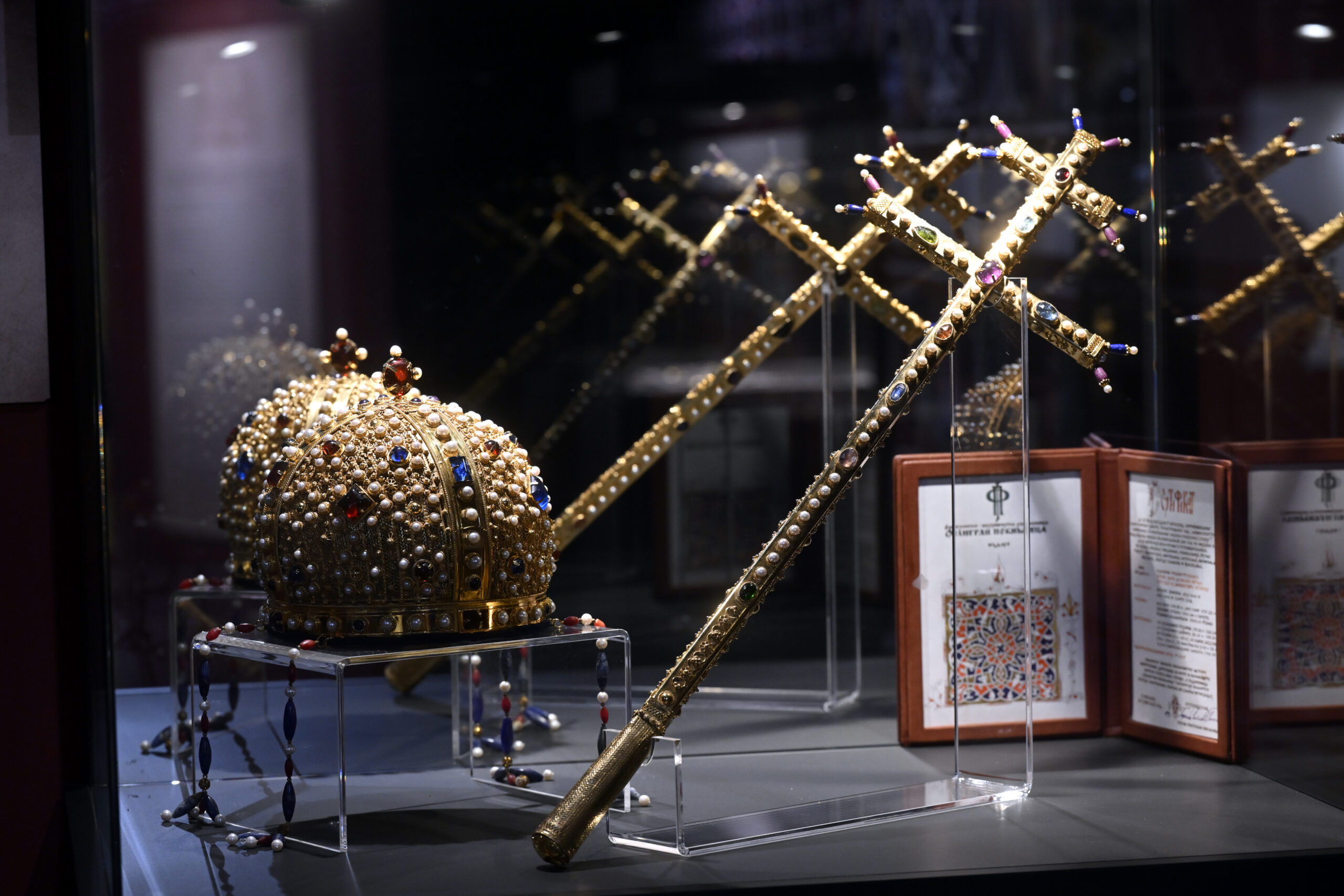
The Crown and Scepter of Tsar Dušan
In most of Europe, the Middle Ages are known as the Dark Age – an epoch of destruction, wars, epidemics, and the collapse of values inherited from the Antiquity. In contrast, in the territory of the ‘Byzantine Circle’, which included the majority of Serbian lands at the time, the medieval period was a time of growth, political strengthening, development of institutions and the economy, and an age that saw the spreading of literacy and the arts. The experts of the Historical Museum of Serbia have effectively brought to light the brightest examples of the period, after years of dedicated work on creating and developing a unique collection of reconstructed garments and regalia of Serbian medieval rulers.
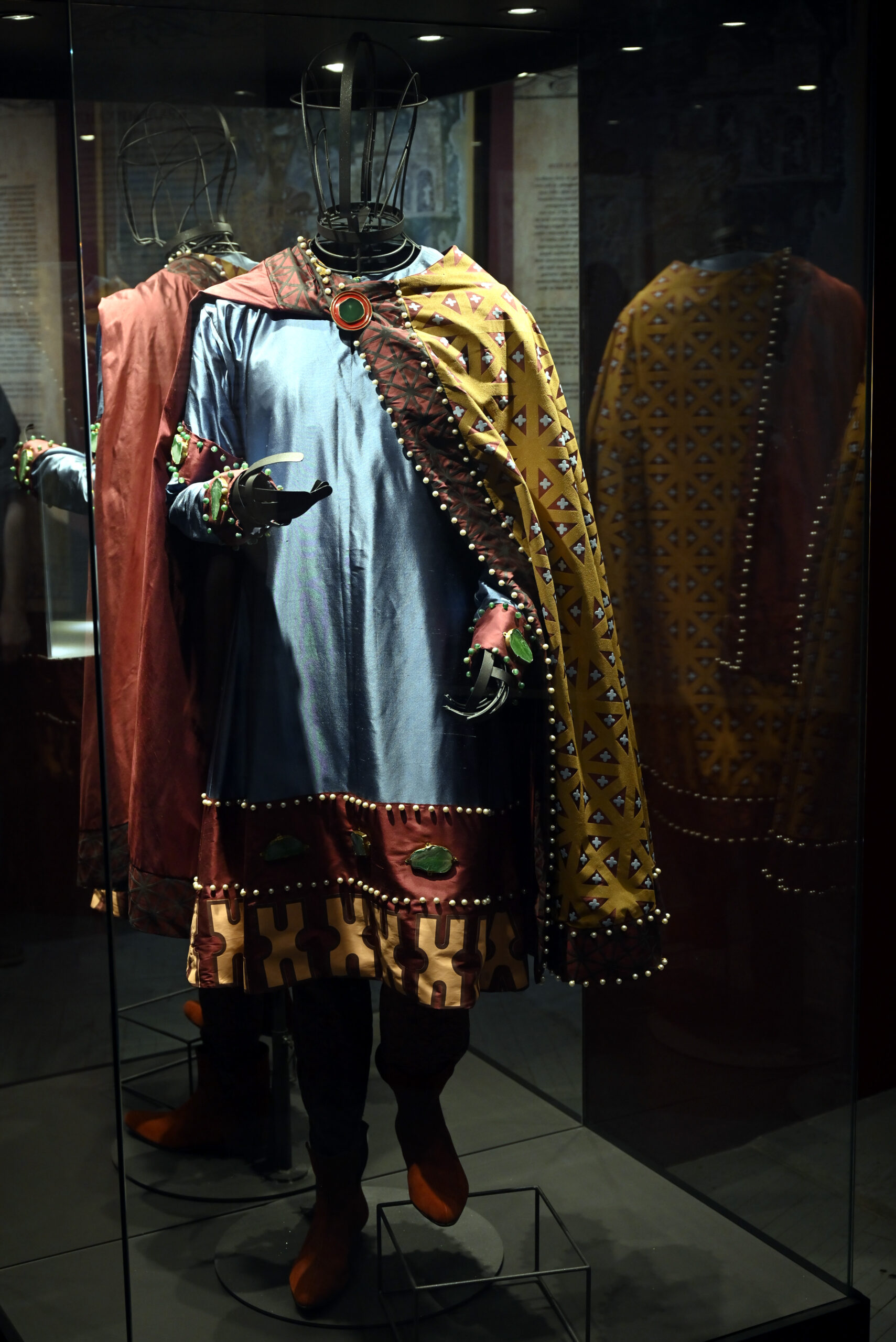
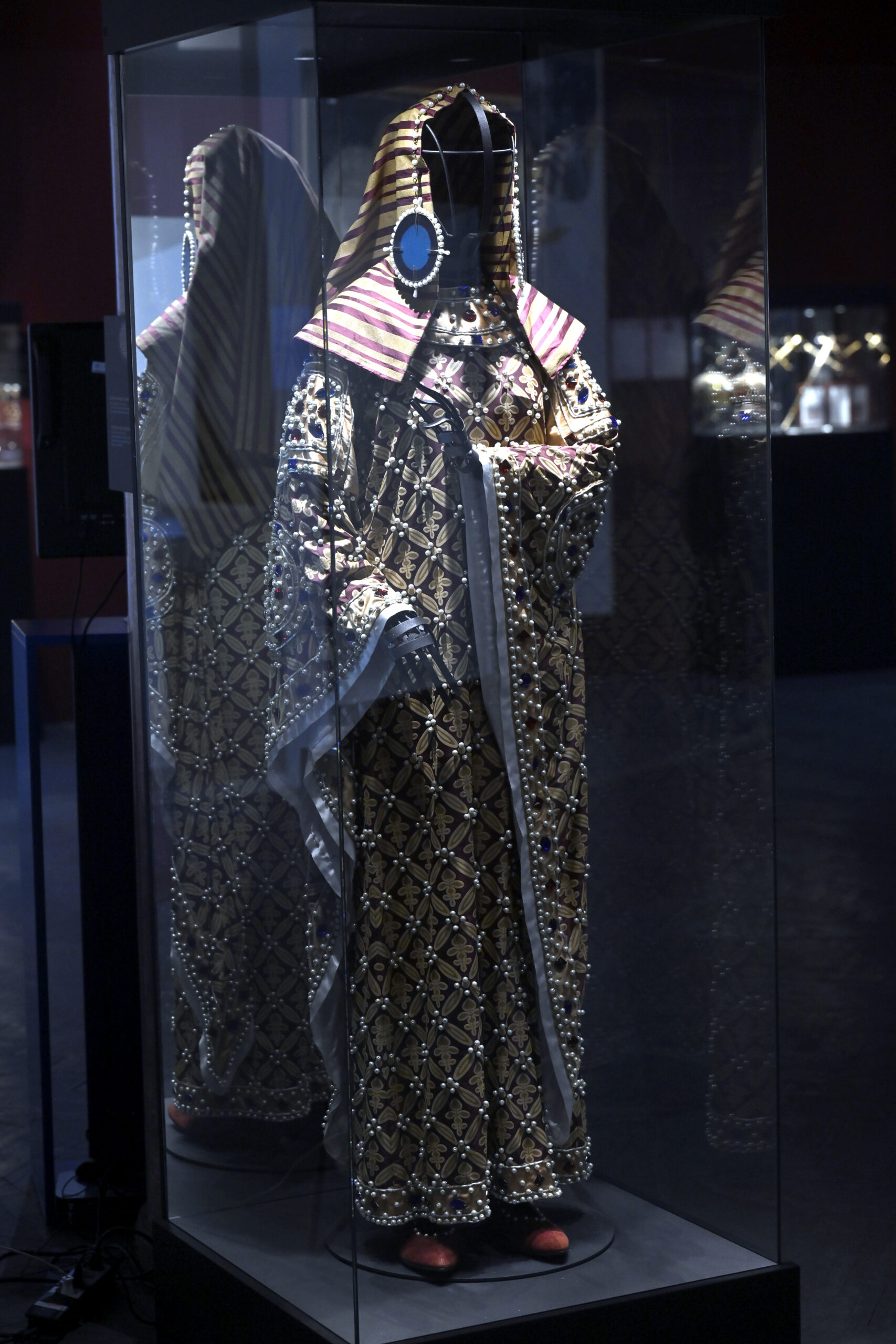
Owing to this pioneering effort, we can now see how Serbian princes, kings, and despots dressed, as well as the insignia that demonstrated their authority, featuring garment ornaments of exceptional beauty and opulence. This collection of items, reconstructed based on the authentic portraits of rulers in the frescoes from churches and monasteries, their endowments, has brought the old monarchs to life in all of their authenticity and splendour.
Behind this decade-long endeavour which built a time bridge back to the early Middle Ages stands a wide range of curators and associates of the Historical Museum of Serbia. The team of experts, leading professionals in their respective fields and exceptional artisans, was led by Museum director Dušica Bojić, who succeeded in implementing one of the most attractive museum efforts in our country, shining a bright light on the darkness of centuries past not only with the light of scientific truth, but also with the brilliance of dedicated effort and talent.
The exhibition entitled ‘Waiting for the Permanent Exhibition’, has become one of the most popular museum events in Belgrade over the previous six years, gladly visited by foreign visitors and the locals alike. The items on display – garments and insignia of Serbian rulers, are a one-of-a-kind lesson in Serbian history, and also in the history of art, ethnology, ethnography, and artisanal craft. Even more importantly, they are a testimony to the glory and achievements of the Serbian medieval state.
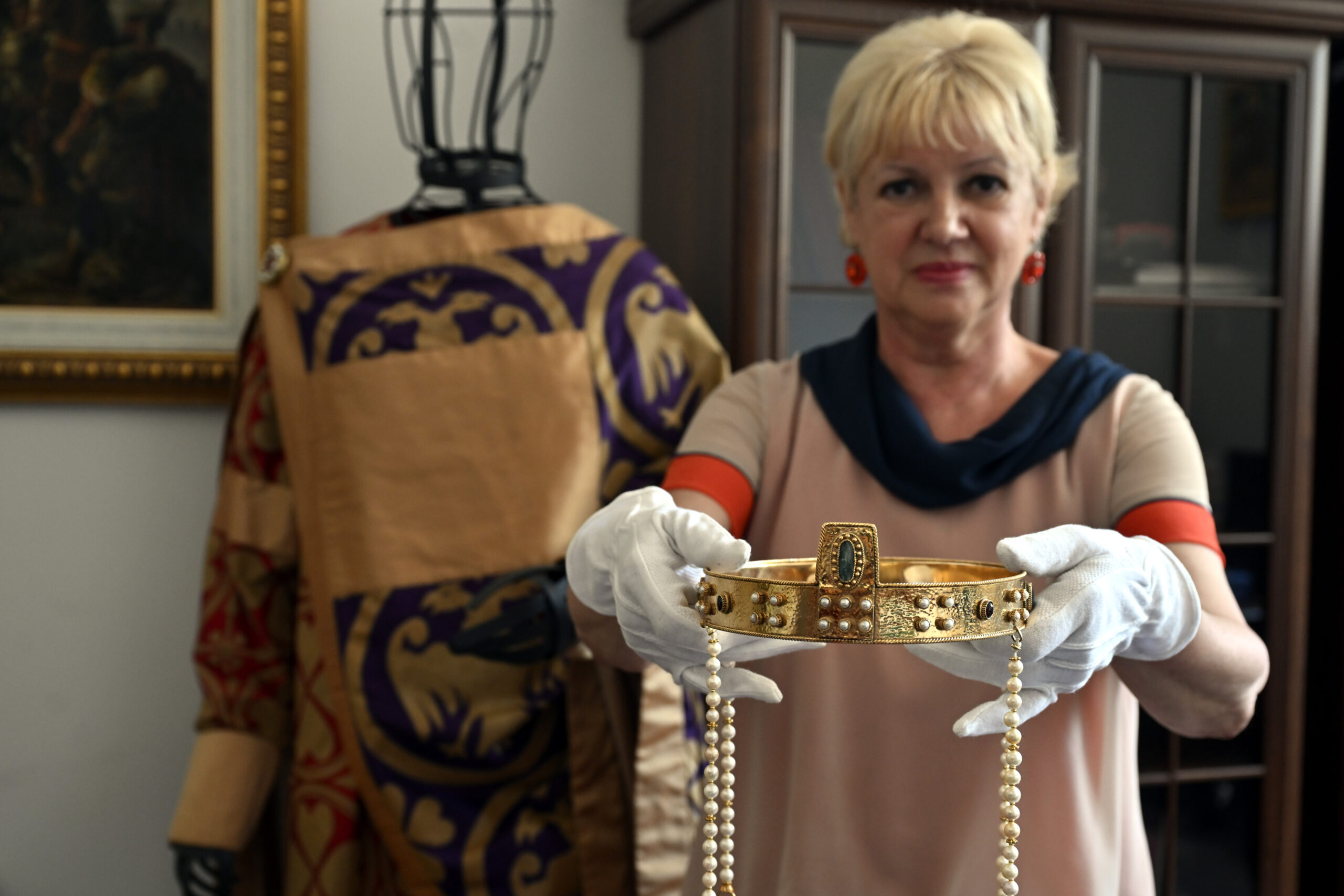
The Director of the Historical Museum of Serbia, Dušica Bojić, with the Sebastokrator’s Wreath of Stefan the First-Crowned
‘More than six years ago, I contacted the workshop of the renowned filigree artist from Kraljevo, Goran Ristović Pokimica, and asked him if he could make a crown identical to the one worn by the Nemanjić dynasty using authentic materials. He replied wittily by saying, ‘Of course, we can do that in Kraljevo. But we have not received such an order in 800 years!’ Still, this time gap was bridged successfully, and Pokimica crafted many of the items in our collection’, Dušica Bojić says about the anecdote that perfectly reflects the complexity of the task.
This endeavour was motivated by the fact that no crowns from the Nemanjić dynasty or other Serbian rulers have been preserved, which speaks volumes of the turbulent history of our country. Still, their appearance is known because of the many portraits of rulers on the frescoes of their endowments. The monasteries where Serbian monarchs have been immortalised can be found all over the Pomoravlje region, in Western Serbia, Kosovo and Metohija, Montenegro, and Croatia. Owing to the efforts of the team of the Historical Museum of Serbia, a total of 10 crowns have been reconstructed and can be seen in all of their glory and splendour. The collection has been complimented by many ceremonial regal garments and accompanying items, such as sceptres, hand crosses, and rings.
‘The reconstruction of the crown of the first Serbian king Mihailo Vojislavljević, a ruler from the pre-Nemanjić era, was recently added to the collection. It was made by the goldsmith workshop of Marsel and Simon Čivljak after the patron fresco from the Church of Saint Michael in Ston on Pelješac, Croatia, with the generous assistance of Predrag Komatina of the Institute for Byzantine Studies and archaeologist, Marko Aleksić. The crown has the shape of a wreath topped by four crosses and is specific because similar crowns have only been present in a short historical period among the rulers of England, Germany, and Norway. It was made from gilded silver and decorated with freshwater pearls, green agate, onyx, jade, chrysoprase, synthetic blue sapphire, and amethyst. Pokimica also made the sebastokrator’s wreath of Stefan the First-Crowned, after a fresco in Studenica Monastery. The crown of the first-crowned king of the Nemanjić dynasty was made from gilded silver and opulently decorated with tourmalines, garnets, rubies, amethysts, and freshwater pearls,’ Bojić says.
You can read the full text in our Dipos Magazine.









 2018
2018