
OUR BLOG
Darko Glišić, Minister for Public Investments of the Republic of Serbia, exclusively for Dipos Magazine: I want a Serbia that continues its unstoppable progress
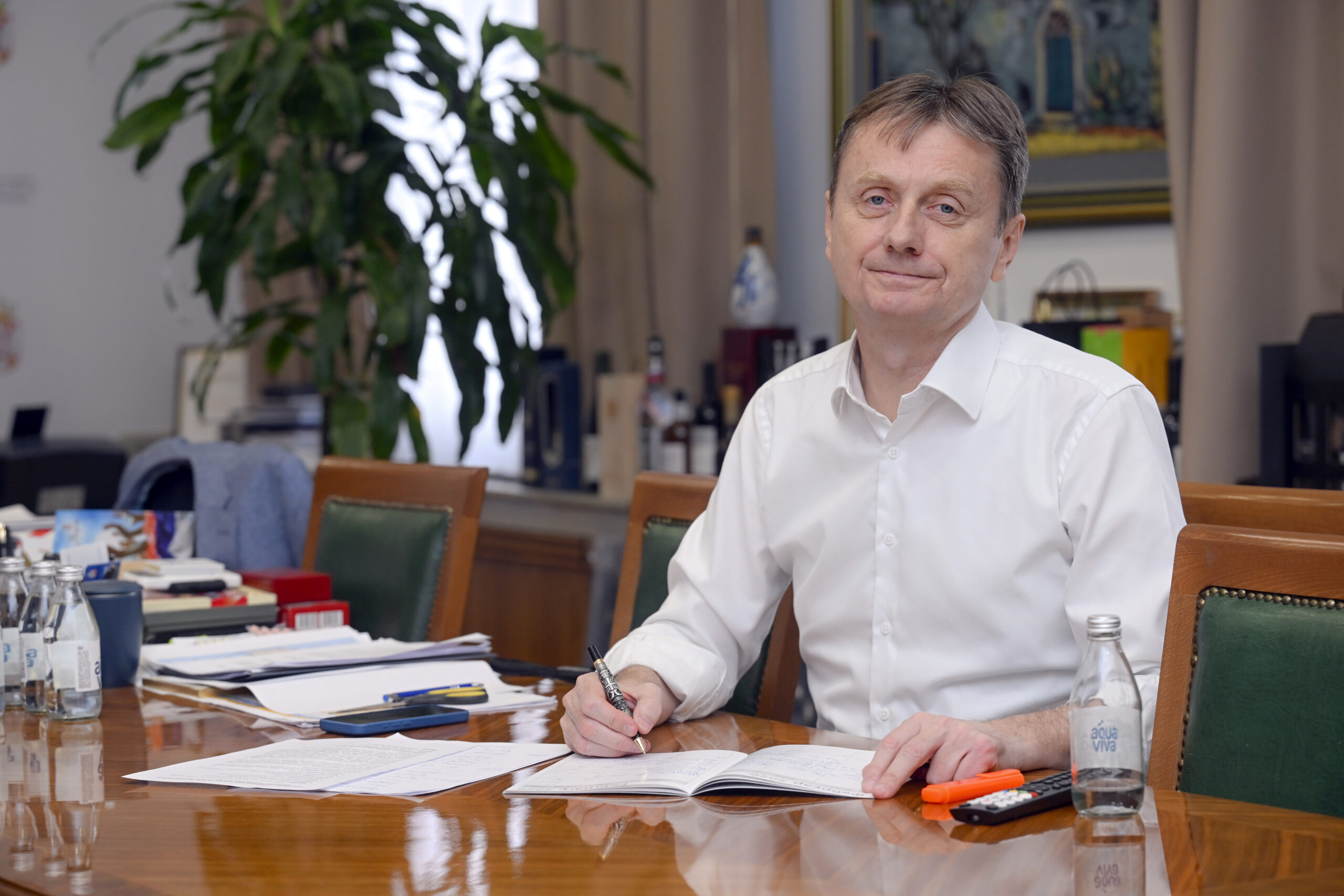
“Our hospitals, schools, and sports and cultural facilities today are modern and meet the highest requirements, which is part of the national strategy of the President of the Republic and the Government.
Highways now reach the far south, the most modern railway lines connect the north, and new sections of highways and motorways are being built in the east and west. A state-of-the-art Clinical Centre has been built in Niš, with a modern maternity hospital to follow, along with schools, cultural and sports facilities, and new water supply systems across Serbia. All of this has contributed to the narrowing of the gap in quality of life between different regions
Everything we do is for the citizens, and you cannot better understand their needs and problems unless you speak to them. For me, that is the foundation of political work. I cannot imagine a working week in which I have not spent at least half of my time on the ground, speaking with citizens”, emphasizes the Minister.
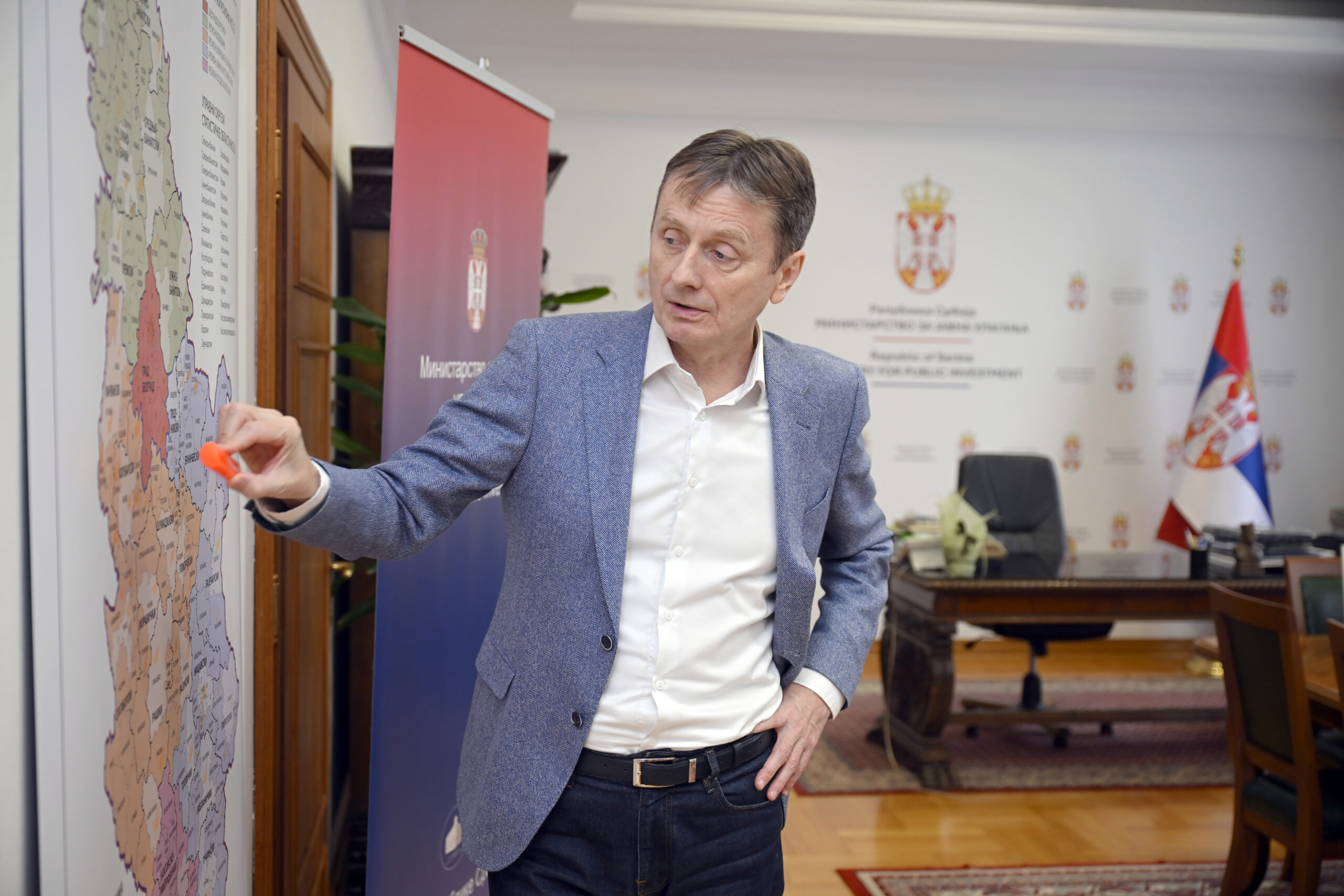
The citizens of Serbia trust their state, and that is why it is the duty of all public officials to preserve and strengthen that trust, as it is a precondition for development and prosperity, says Darko Glišić, Minister of Public Investment, in an interview for Dipos Magazine.
Glišić belongs to a generation of politicians whose professional path has been marked with years of experience in local self-government and dedicated work directly with the citizens. Being recognised as practical and efficient, he has built his career quietly through institutions that most directly reflect the needs of local communities, which has significantly influenced his approach to public policy.
Before he became Minister, Glišić held a number of responsible positions at both the local and national levels, including serving as mayor of Ub, where he gained the reputation as a manager focused on infrastructure development and improving quality of life. His work in the domains of investment, public utility resources, service delivery, and public projects, naturally led him to the portfolio he heads today, which involves comprehensive infrastructure renewal across the country. As Minister of Public Investment, Glišić is recognisable for projects involving the reconstruction of the water supply network, healthcare facilities, hospitals and outpatient units, local roads, and sports halls, as well as for improving the overall quality of everyday life for citizens nationwide. Above all, however, he is known for his attentiveness to any individual he meets on the ground and for his willingness to help whenever possible.
The Ministry of Public Investment has a specific portfolio, since it plays a recognisable role in the direct improvement of infrastructure and everyday quality of life of citizens. As the Minister, how do you see its mission and significance within Serbia’s domestic policy and its overall development priorities?
Over the past decade, Serbia has experienced significant expansion in all fields. One of the ministries contributing to this overall economic and infrastructure growth is certainly the Ministry of Public Investment, which is directly responsible for the reconstruction and building of facilities of vital importance to the lives of Serbian citizens.
How is the vision of public investment shaped within the Ministry, so as to simultaneously respond to the needs of citizens and the long-term development goals of the state?
In cooperation with the President of the Republic and the Government of Serbia, specific goals are defined, such as the Serbia 2030–2035 national strategy, and the results from previous years are clearly visible. Today, our hospitals, schools, and sports and cultural facilities are modern and meet the highest standards. Of course, it is not easy to renew everything quickly, as there have been decades of neglect, but the achievements of the state in this field are crystal clear at each step and in each part of Serbia.
Fields such as healthcare, education, and social infrastructure, bear special social importance, and investment in these areas is directly aimed at the benefit of citizens. How much has the Ministry of Public Investment been engaged in these areas until now?
Working conditions are the foundation of success in each of the areas you mentioned. There can be no proper conditions in dilapidated buildings that are 60 or 70 years old, not to mention facilities that did not exist at all. Today’s hospitals and schools are state-of-the-art facilities with completely new equipment, and the Ministry has been very dedicated to this task, as it directly improves quality of life.
It seems that in Serbia people still generally believe that the state is responsible for everything, and that it is the only contact point for all problems that citizens face daily. How much are public authorities obligated to react and help, especially when it comes to the citizens’ vital interests, even if there is no formal obligation?
This is an issue I face every day. The job of anyone in a position of responsibility is to speak with citizens and provide answers. Even if a question does not fall within their jurisdiction, they can advise people to turn to the competent authority. If people believe the state is responsible for everything, it means they trust it. That is why it is the duty of public officials not to undermine that trust, but to remain at their disposal and be open for discussion.
Historical circumstances, along with a host of other factors, resulted in the fact that different parts of Serbia are unevenly developed. Is it realistic to expect that we could reach at least an approximate level of development in all of Serbia’s regions in the coming decades, and what are the roles that public investment and the policy of the Government of Serbia play in that long-term process?
In the past, it was often said that Serbia effectively began at the outskirts of Belgrade, at the Bubanj Potok suburb. Today, the situation is completely different. Significant investments across all parts of the country have made Serbia more cohesive and accessible. Highways now reach the far south, the most modern railway lines connect the north, and new sections of highways and motorways are being built in the east and west. A state-of-the-art Clinical Centre has been built in the south, in Niš, with a modern maternity hospital to follow, along with schools, cultural and sports facilities, and new water supply systems across the country. All of this has contributed to the narrowing of the gap in quality of life between different regions, and we will continue in this direction, as every citizen matters, regardless of the district they live in.
How would you evaluate the effects of digitalisation in the operating of public authorities and local self-governments and the efficiency and accountability of the public administration staff?
Anything that makes daily functioning easier has my full support. I believe new technologies have helped in this regard, although the efficiency and accountability of public administration employees can always be improved.
Local public has witnessed your everyday engagement and close contact with citizens. What kinds of experiences and emotions do you take from meeting ordinary citizens? What can a professional politician learn from the everyday life of citizens?
They can learn a great deal. After all, everything we do is for citizens, and you cannot better understand their needs and problems unless you speak to them. For me, that is the foundation of political work. It can get very emotional, as you meet different people and life stories, but without empathy and understanding, you are not suited for this job. I cannot imagine a working week in which I have not spent at least half of my time on the ground, speaking with citizens.
Last year was extremely challenging for your health, but everyone was surprised by your resolve to go back to regular activities relatively quickly. What is it that motivates you the most in performing your ministerial duties?
My first motivation was simply to survive, and everything else would be easy. Joking aside, God and our doctors decided it was not yet my time, while strong character and discipline helped me return to work quickly. I do not focus on the title of the function I hold; I simply like helping people. I did that as a mayor, and I strive to do the same as a minister. Time gives everyone the fairest assessment, and it will do so for me as well.
Which strategic projects of your Ministry do you believe to be particularly important for the country’s development in the coming years, and how do you see Serbia by the middle of the century?
All of the projects are important. Each one helps people live better, and we do not divide people. In some places, building a new school is crucial; elsewhere, the priority is a water supply system. In regional centres, hospitals are naturally the focus, and we are truly striving to respond to all challenges. I see Serbia as a modern, developed country that continuously strives to develop and is never satisfied with what has already been achieved.
The Minister’s interview, along with a range of current and compelling topics from the fields of diplomacy, culture, and Serbia’s rich historical heritage, can be found in the latest edition of Dipos Magazine.









 2018
2018