
OUR BLOG
H. E. Nikola Nedeljković, Ambassador of the Republic of Serbia to the Hellenic Republic
Greece is synonymous with friendship and brotherhood
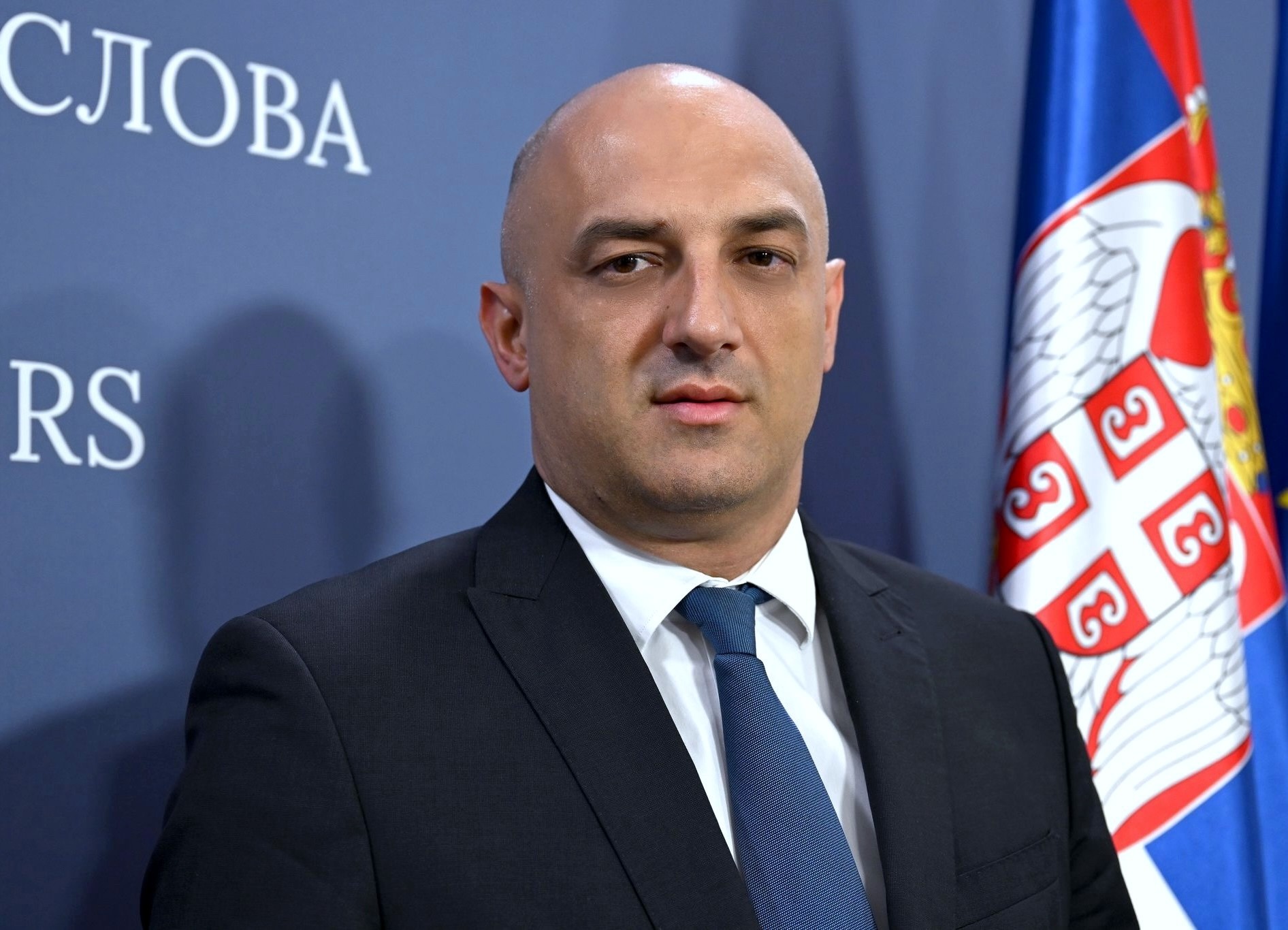
It has been exactly 146 years since Serbia and Greece officially established diplomatic relations, but the ties between the Serbian and Greek peoples are much older and date back to the national liberation struggles, to the times of Karađorđe and Rigas Feraious. Our nations have always been on the same side of history. In fighting for universal civilizational values, we have celebrated many victories together, including triumphs in the two world wars. Even in the challenging times of today, Greece has proven itself as a true friend of Serbia. They have been supporting our positions in matters of vital state and national interests of Serbia, primarily in the context of their non-recognition of so-called Kosovo. They are also firmly supporting our path towards full-fledged accession to the European Union, says Nikola Nedeljković, Ambassador of the Republic of Serbia to Hellenic Republic, for ‘Dipos Magazine’.
Mr Nedeljković highlights that he is honoured to represent Serbia in a country with which we have deep historical, spiritual, and cultural ties, as well as a proven friendship.
‘As ambassador, I will aim not only to preserve the memory of glorious moments of our history, but also to make sure that the friendship and collaboration between our two countries and peoples in the future continues to strengthen and improve’, states the ambassador.
Which historical example means the most to you personally as a testimony to the lasting and deep connections between the Serbian and Greek peoples?
For me, and surely for all Serbs, this is without a doubt the island of Corfu and the period of World War I. Few events in history have had such a strong impact on the establishing of meaningful ties between two peoples as the time when the Serbian army, following the Great Retreat across Albania, found their refuge on Greek soil. That is the reason why for Serbs the island of Corfu is known also as the ‘Island of Salvation’, and the nearby islet of Vido, unfortunately, as the ‘Island of Death’ and the ‘Blue Tomb’.
On Corfu, an island that Serbia will not and cannot forget, at times of greatest suffering and temptation, the Serbian army found new strength and new hope, and it is from here that it travelled back to liberate its homeland. Corfu, which opened its doors and hearts wide for the exhausted Serbian army, therefore became a lasting symbol of compassion and solidarity. Unfortunately, behind the victorious fighting at the Salonica front and war triumph, there remains another cemetery – the Serbian Military Cemetery at Zeitenlik. That is why we remember with great reverence the heroism of the Serbian army which brought freedom to our people through its selfless sacrifice and relentless struggle in the Great War, showing the true meaning of honour, courage, and patriotism.
We marked another anniversary of the landing of the Serbian army to the Ionian islands and the breakthrough of the Salonica front this autumn in Greece, as is the tradition. The central state commemoration on the island of Vido was led by Prime Minister of Serbia Prof. Đuro Macut, PhD.
How would you describe the current relations between Serbia and Greece?
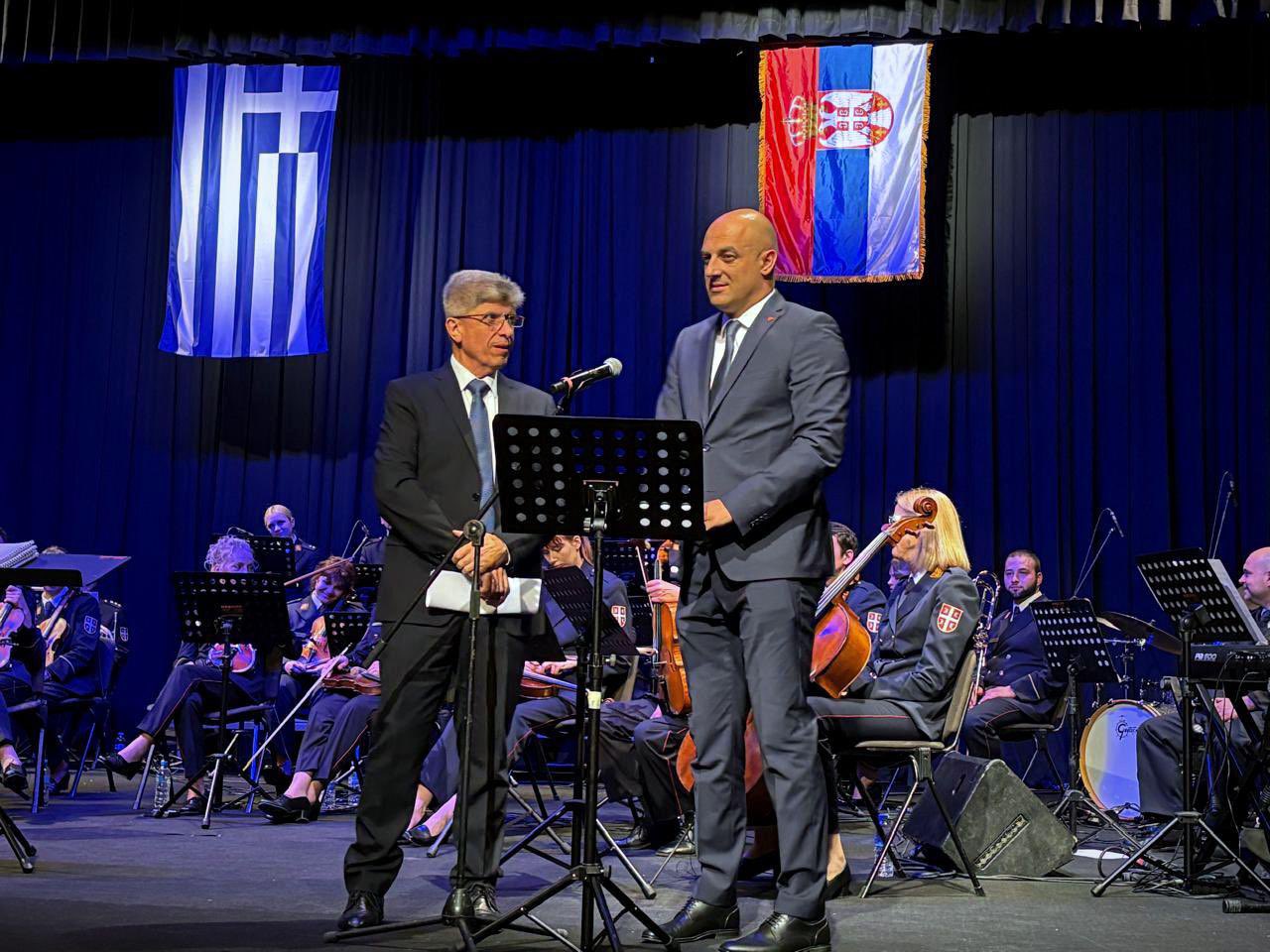
It is on the foundations of historical closeness, solidarity, spiritual, and cultural ties that the exceptional modern-day political relations and strategic cooperation between Serbia and Greece are based on, under the leadership of President Vučić and Prime Minister Mitsotakis. The personal friendship between the two leaders and their regular meetings strongly contribute to the intensifying of Serbian-Greek cooperation across all levels.
The highest level of relations between Serbia and Greece was formalised by the Joint Declaration on the Establishing of Strategic Partnership which was signed by President Vučić and Prime Minister Mitsotakis in Athens in 2019. Major importance is also attached to the High Council for Cooperation between Serbia and Greece, which is co-chaired by President Vučić and Prime Minister Mitsotakis.
It is very important that we have a well-developed political dialogue, and that there is readiness to further strengthen it. Therefore, the Embassy of Serbia in Athens has initiated the organization of many visits of officials from the two countries.
Over the past year, Greece was visited by the Prime Minister, Prof. Đuro Macut, PhD, who was awarded the title of honorary doctor of the Athens Medical School of the University of Athens, the Minister of Foreign Affairs Marko Đurić, Minister of Public Administration and Local Self-Government Snežana Paunović, Minister of European Integration Nemanja Starović, Minister of Health Zlatibor Lončar, Minister of Mining and Energy Dubravka Đedović-Handanović, and Minister without Portfolio in charge of the diaspora Đorđe Milićević, along with high-ranking officials of the Ministry of Foreign Affairs.
On the other hand, in Belgrade we welcomed the Prime Minister of Greece Kyriakos Mitsotakis, Minister of the Interior Theodoros Livanios, Minister of Infrastructure and Transport Christos Dimas, and Minister of National Defence Nikos Dendias.
How big is the current economic exchange between our two countries and what are the potentials for its further development?
There is evidently a strong commitment, demonstrated by President Vučić and Prime Minister Mitsotakis, to follow up the exceptional level of political relations with equally strong economic relations between our two countries.
In that regard, we are striving to firstly increase the volume of foreign trade exchange with Greece, and we are particularly pleased that it has been growing year after year. Our goal is to first try to raise the goods trade to one billion euros, which would, together with tourism, bring the total value of our economic cooperation to two billion euros.
We also wish to continue developing our cooperation in the domains of investment, energy, transport, tourism, agriculture and food industry, and new technologies, by implementing joint infrastructure projects.
We are witnessing that more of our investors are interested in the ‘golden visa’ programme in Greece. This is not just a confirmation of the attractiveness of the Greek real estate market, but also an indicator that Serbian investors are looking for new opportunities to expand their businesses. We are supporting this trend as well as any other steps that contribute to the connecting of the economies of our two countries and to a better positioning of our country in the region.
Also important is the implementation of joint infrastructure projects. There is an enormous strategic potential behind the expansion of the high-speed railway between Belgrade and Budapest into a modernised railway connecting Budapest, Belgrade, Thessaloniki, and Athens. The section to Subotica, which was recently opened by President Vučić is an important step in that direction. Also, with the construction of the high-speed railway between Belgrade and Niš, it will be faster to travel to Greece, and Serbia will become the central point of the railway network connecting Central Europe with Thessaloniki and Athens.
I cannot leave out the great importance and development potential that the organisation of EXPO 2027 in Belgrade will bring to Serbia. Greece was among the first countries that officially confirmed their participation in this important global manifestation. There is no doubt that the Greek pavilion will be among the most popular.
Please refer to our Dipos Magazine for the complete interview with Ambassador Nedeljković.









 2018
2018