
OUR BLOG
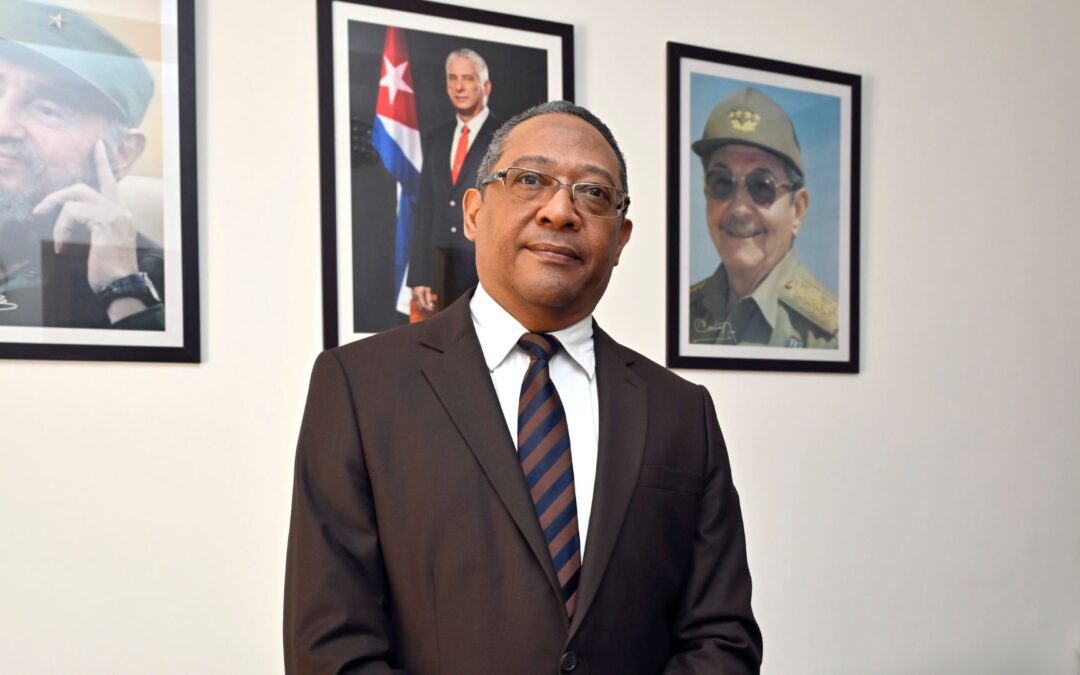
H. E. Pavel Orencio Díaz Hernández, Ambassador of the Republic of Cuba : We still dream about a better world for everyone
BILATERAL RELATIONSHIPS
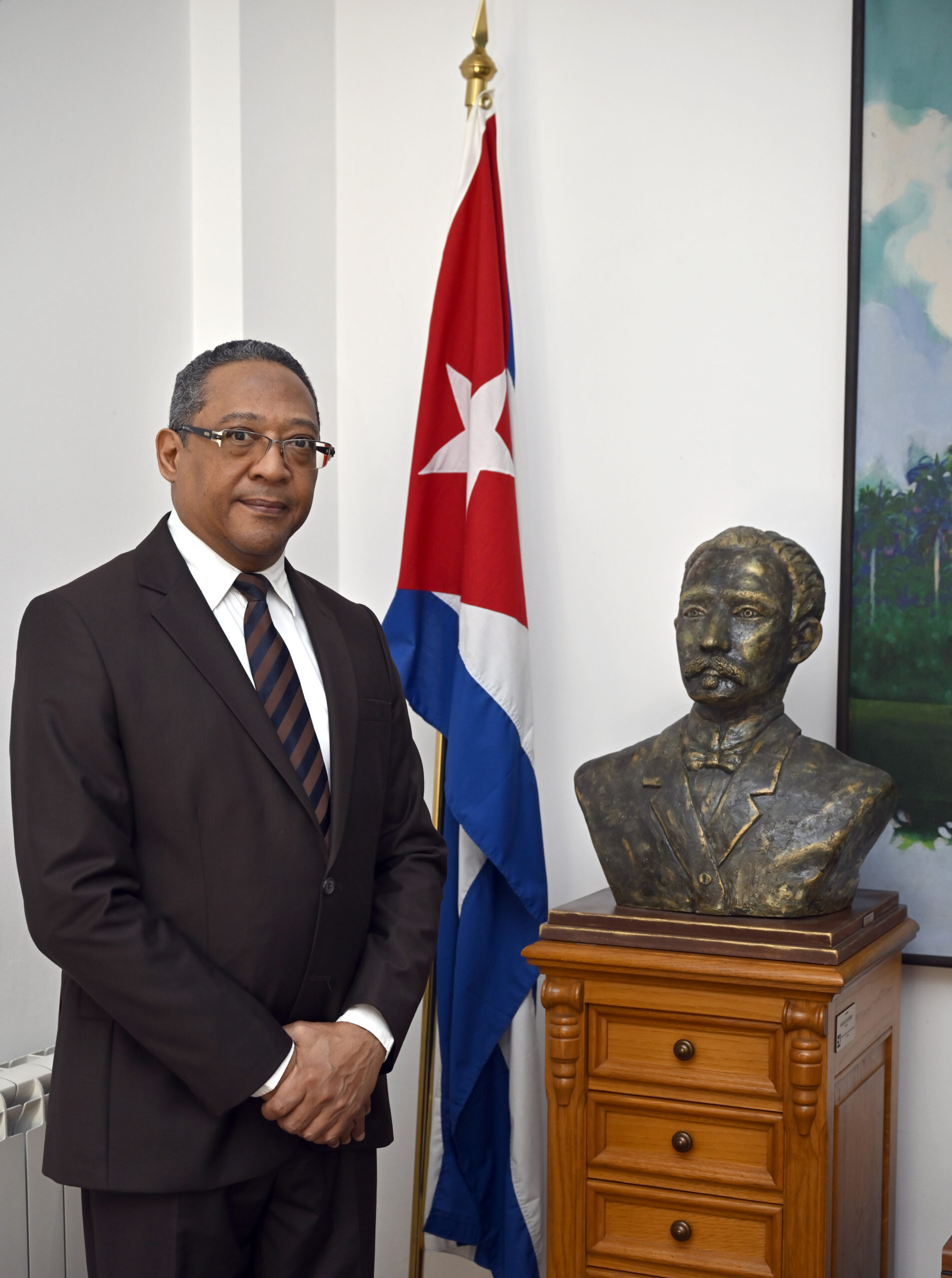
“The history into which Havana and Belgrade have invested so much effort has called for unity, cooperation, the defence of peace and universal justice, equality, and respect for sovereignty. The efforts and dedication to working for peace, justice, and cooperation provide us with enough pragmatism and responsibility for the future of humanity”, His Excellency states.
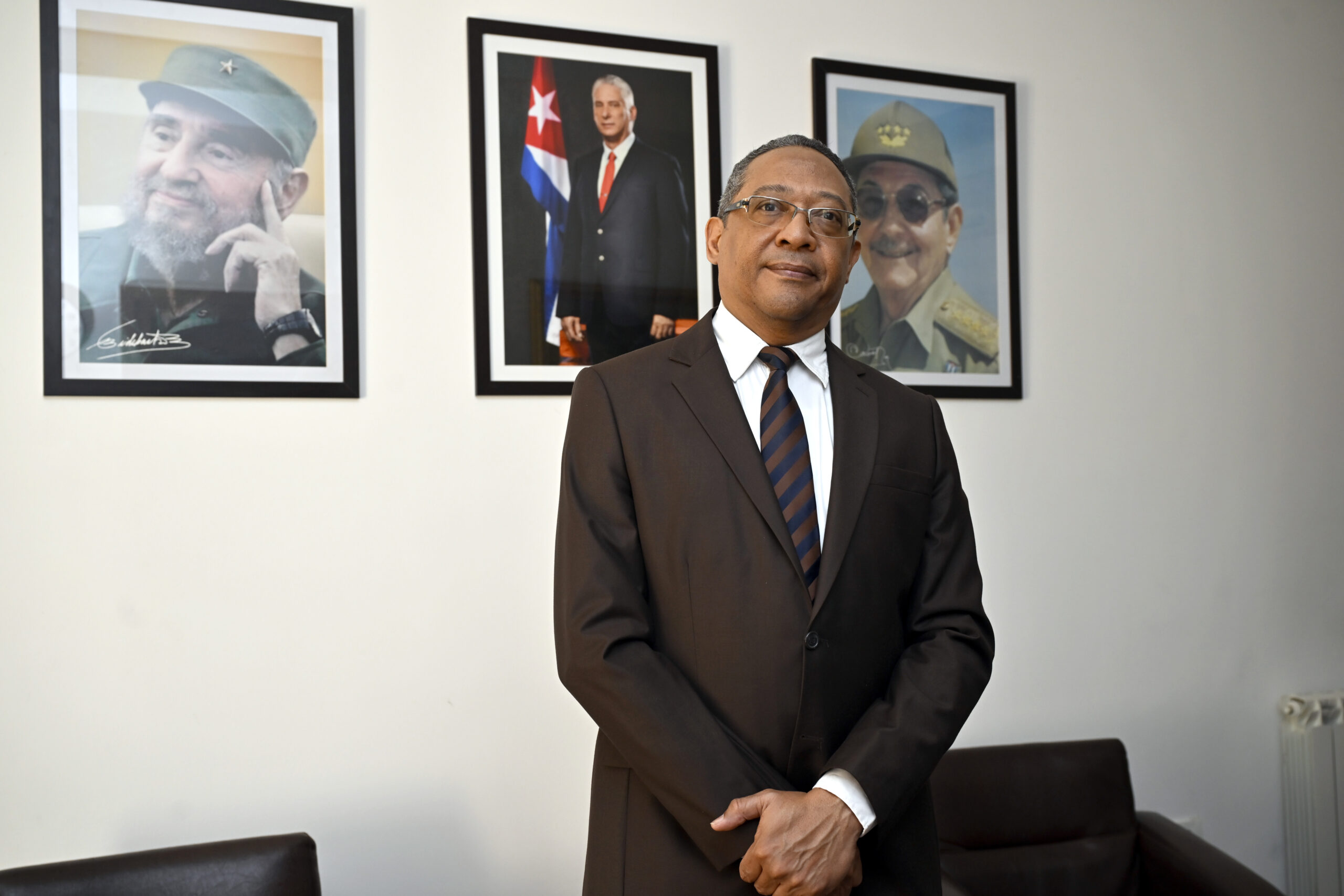
It is a great privilege to have been appointed to represent my country in Serbia, because of the deep ties of friendship and mutual sympathy that have united our peoples throughout history. We recently celebrated 123 years of diplomatic relations. Despite complex global events, including two world wars and the equally dramatic Cold War, our relations have been based on brotherhood and shared will of both sides to deepen and diversify them. Currently, we are maintaining excellent relations, with a broad legal framework that serves as the context for continued expansion into areas of mutual interest. We are encouraged by the spirit of cooperation and sincere friendship that unites us to develop an agenda to elevate economic and trade relations and cooperation to the favourable level which has already been achieved in overall political and diplomatic relations.
This was stated for DIPOS magazine by the Ambassador of the Republic of Cuba in Belgrade, Pavel Orencio Díaz Hernández. His Excellency warns that the world needs a stronger struggle for the principles of international law as the only guarantee of universal peace.
We are witnessing global turbulence and changes in international relations. How do you see the role of small and medium-sized countries in the shaping of a more equitable international order?
We are witnessing wars, aggression, the imposing of force over international law, upheavals in the global economy, and the saddest thing of all: death and deprivation. The war in the Middle East, which is disturbing not only the region but the entire world, along with threats that ‘in a single night an entire civilization could perish irreversibly’, and thousands of victims, including children, such as the pupils from the Iranian ‘Minad’ primary school, is an insult to humanity, to the legacy of centuries of life and accumulated wisdom. We are facing a serious dilemma: whether to accept defeat or raise our voices in defence of the system of laws, agreements, and practices that constitute international law. It is true, however, that international law has not been able to prevent wars and fratricidal aggressions that have left terrible marks of death and destruction. How can we forget the atomic bombs on Hiroshima and Nagasaki, countless invasions, the genocide against the Palestinian people, the use of blockades, sanctions, and economic pressures as instruments of domination and force to impose someone’s will precisely against small and medium-sized nations?
However, the unforgettable UN Charter at least established certain rules that opened up the space for dialogue and decisions aimed at peace, harmony, and coexistence among peoples. These norms and practices, which can be improved, represent an imperative necessity for nations in the face of the unjust international order that prevails, that has been imposed on us, and that leads us toward chaos and the imposition of the law of the jungle. In this crucial struggle to preserve and strengthen this order, it is up to small and medium-sized nations to unite in all possible spaces of regional and international consultations and to defend the fundamental and sacred principles of sovereignty, independence, and free self-determination. Small and medium-sized states cannot remain passive actors, because our lives as sovereign and independent nations depend on it.
Both Belgrade and Havana have been known historically for their striving for independence, freedom, equality, and cooperation among peoples. Do you thing this struggle has been quixotic?
The history you are referring to remains relevant and continues to promote cooperation, the defence of peace and justice, equality, and respect for sovereignty. The world that was dreamed of back then will always remain a necessary aspiration. Giving up on those dreams would mean accepting division, chaos, selfishness, and domination. Don Quixote can serve as a metaphor when it comes to the struggle against injustice and perseverance in the face of gigantic, almost impossible obstacles. Today, the windmills are found in aircraft and aircraft carriers that cause chaos, death, and disaster, and confronting them seems beyond all logic. But, our efforts and dedication to work for peace, justice, and cooperation give us sufficient pragmatism and responsibility for the future of humanity.
These are the commitments that drive Cuban foreign policy in the face of all challenges, with the greatest realism, but also with the determination not to abandon the dream of a better world for all.
Cuba is well-known globally for its achievements in the fields of health, biotechnology, and, especially, education. What are the best ways to improve cooperation between the two countries in these fields?
For years, Serbia and Cuba have maintained a comprehensive exchange on the issues of mutual interest, and there are also agreements in the fields of healthcare, education, biotechnology, and more. The modalities of cooperation are limitless, as long as there is clear political will, and in that sense our countries have sustainably preserved that readiness and willingness.
The exchange of information and research methods between experts in these and other sectors must be accompanied by practical and concrete actions. Cuba has a strong biotechnology and pharmaceutical industry, which enables us to produce more than 300 of our own medicines and biopharmaceuticals, including a therapeutic vaccine against lung cancer; a treatment for diabetic foot ulcers, unique in its results and internationally recognized; interferons and monoclonal antibodies used in oncology, virology, and autoimmune diseases. However, a registration process is required beforehand to market them. In the field of healthcare, as well as education, there are experiences that could be beneficial for both countries.
What else can the world, including Serbia, learn from the Cuban people and their dynamic history?
I am one of the people who are convinced of the importance of universal knowledge, science, and culture. I also support the view that Cuba’s historical and cultural experience can contribute to the world, especially in the struggle for independence and dignity. These days, Cuba, faced with threats and economic, energy, and financial pressures, shows signs of a strong spirit of resilience, courage, creativity, and realism, in line with the sacred principles of sovereignty and independence, without losing the traditional joy for which it is known. Our rich culture is combined with a high level of education, with values such as altruism, solidarity, and a deep sense of patriotism and heroism. I believe that in this remarkable heritage, the world can find an important reference to study.
What are the biggest structural challenges for Cuban economy today and what are its main priorities?
The main obstacle to our country’s economic development is the nearly seventy-year economic blockade imposed against Cuba since the very beginning of the revolution. More than 80 percent of the Cuban population has been born and lived under the blockade, and its essence lies in the Lester Mallory memorandum, which has been in force for a full 66 years.
In that foundational document of U.S. policy toward Cuba, the objective is clearly stated—to use all possible means to weaken Cuba’s economic life. To this we can add the current unprecedented energy siege, justified by the arbitrary and unjustified designation of Cuba as a ‘threat to U.S. national security’, along with threats directed at any sovereign nation to cut ties and stop selling oil to our country. There is also the unjustified persecution of legitimate medical cooperation with the world, the inclusion of Cuba on a unilateral and false list of alleged state sponsors of terrorism, and a relentless media war against our country.
In such circumstances, the development of the national economy, with its high dependence on international trade, is extremely complex. The country has practically had to develop under conditions of a wartime economy. We have had to adjust our priorities to ensure the rational use of resources, maximize the use of internal capacities, and make the most of our relationships with trading partners. Cuba is committed to transforming its energy matrix in order to become less dependent on oil imports, giving the highest priority to the use of solar energy. Food production, biotechnology and pharmaceutical products, social programmes, and the recovery of tourism are currently among the priorities of the Cuban economy.
The Cuban Embassy has been Dipos’s tenant for 63 years. How do you see the role of our Company in the life of the diplomatic community in Serbia?
Dipos is a luxurious guarantee for the functioning of the diplomatic corps in Serbia. A high level of professionalism in managing the buildings occupied by embassies provides a privileged precondition for diplomatic activity. Over the years, Dipos has built standards of quality and security characterized with stability, logistical support, tradition, and trust. Dipos has also provided us with reliability and prompt attention to the urgent needs of our activities. In Dipos, Cuba has a reliable and loyal partner: always kind, available, and helpful. For this, we will always be deeply grateful.
It is interesting to note that there is a company by the name of PALCO in your country, which is actually our company’s counterpart. Is there any room for cooperation?
The PALCO Business Group in Cuba is dedicated to managing comprehensive services for the diplomatic corps, as well as organizing congresses, fairs, and exhibitions. The business group also includes a customs and freight forwarding agency, which facilitates imports, exports, and international logistics, primarily for the benefit of the diplomatic corps. In short, it offers more than 10 comprehensive services, ranging from logistics to event organization, with a focus on quality and exclusivity.
Dipos would certainly benefit from becoming acquainted with this group, visiting our properties, fairs, exhibitions, and conventions. Any potential cooperation would undoubtedly support the promotion of international relations.
Please read the full interview, along with numerous current topics in the fields of diplomacy, culture, and Serbia’s rich historical heritage, in the latest edition of Dipos Magazine.









 2018
2018